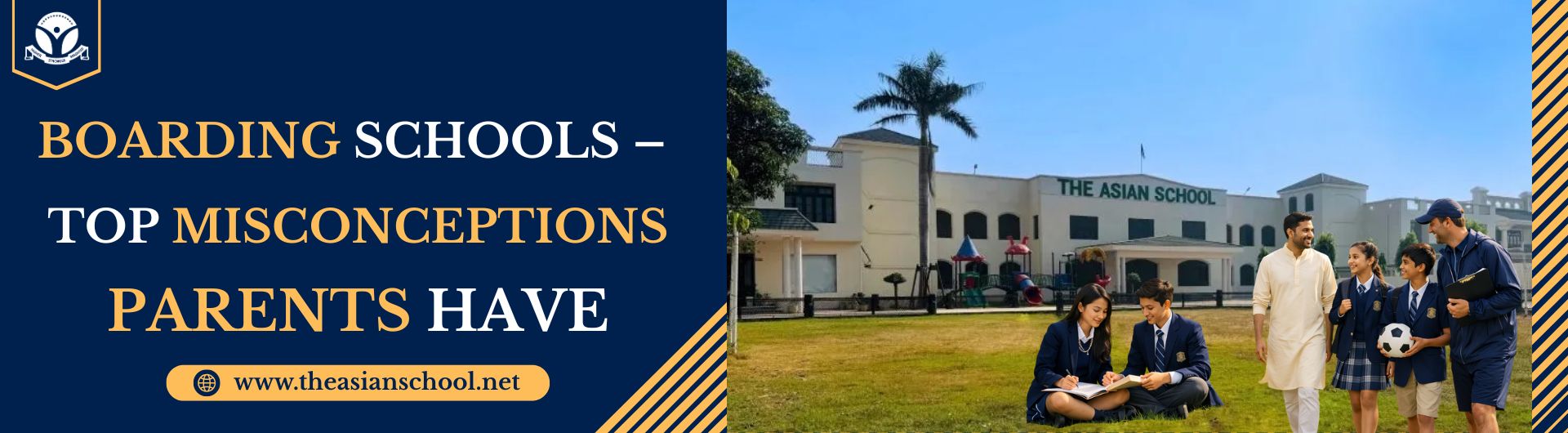


Selecting the appropriate educational path for a child is one of the most remarkable decisions a parent makes. When thinking about boarding schools in India or internationally, parents are usually bombarded with a barrage of images and concepts, many of which are outdated, misleading, or just untrue. These misconceptions, usually fueled by old literature or dramatic movies, can lead to unwanted anxiety and prevent families from witnessing the real value of a residential education.
The question, “Are boarding schools good for children?” is difficult, but the answer starts with detaching myth from modern existence.
- Myth 1 – Boarding Schools are Only for Rich People and are Too Expensive
- Myth 2 – Boarding Schools are Too Strict and Restrictive
- Myth 3 – Parents Who Choose Boarding Schools Are Distant or Uncaring
- Myth 4 – Boarding Schools are Only for Troubled Kids or Academically Weak Students
- Myth 5 – Boarding School Students are Isolated and Miss Out on Social Life
- Are Boarding Schools Good? The Final Verdict
Myth 1 – Boarding Schools are Only for Rich People and are Too Expensive
Most people believe that boarding schools are extremely expensive and that financial assistance can only be received from rich families. The perception is valid in part because drug-infested school campuses cost much less than everyday school tuition; however, reality offers a much more complicated picture.
Financial Realities –
1. Total Cost of a Boarding School – The expense incurred while attending a boarding school includes not only tuition and fees for courses but accommodation, 3 to 4 meals per day, laundry, supervision, and guidance with evening study, as well as access to top-notch athletic and non-athletic programs and facilities. When parents contrast the total cost of a day-school year plus private lessons with a boarding-school education, the disparity between the two becomes less wide.
2. Financial Aid and Scholarships – Most reputable boarding schools are accredited not-for-profit entities and believe in the importance of socio-economic diversity. To provide equal access to excellent academic preparation, these schools have extensive financial aid and merit scholarship programs designed to meet the needs of aspiring students. The best approach is to directly contact the school regarding financial support options.



Myth 2 – Boarding Schools are Too Strict and Restrictive
Numerous parents wonder, “Are boarding schools strict?” The image of a strictly implemented, military-style environment is usually the first thing that comes to mind.
Focus on Structure, Not Oppression –
1. Strictness vs. Structure – Modern Boarding Schools emphasize still using structure, but not through strict rules. The rules and structure are intended to help teach life skills. Such skills are essential to being successful later on in Life regarding discipline, time management, responsibility, etc. The structure associated with these schools can also help eliminate several common conflicts that typically occur between teens and their parents today.
2. Supervised Independence – Students are given increased levels of freedom and responsibility with adult supervision. The staff members’ intent is not to limit students’ freedoms; they want to prepare the students for living independently when they go away for college.
3. Pastoral Care – The members of the staff at most modern schools do not exhibit characteristics of being rigid. Many times, they live on campus with their families, and many of them serve multiple roles in addition to being teachers/coaches. They provide emotional support, guidance, and mentorship to the students daily. Therefore, many students describe the school community as their “Second Family.”
Myth 3 – Parents Who Choose Boarding Schools Are Distant or Uncaring
This is a profoundly emotional misconception that can lead to parents’ meaningful guilt: the thought that sending a kid to a boarding school is a way to distance themselves from a disturbed or undesirable child.
The Reality of Modern Parental Involvement
1. A Positive Choice – Most parents who choose boarding education for their children do so as a positive choice. Parents value what a great, all-around education boarding schools foster for their children. Boarding schools promote high academic performance, strong moral values, and foster independence.
2. Built, More Meaningful Relationships – According to many parents and students, the student-parent relationship becomes closer and more meaningful. During the week, boarding schools help eliminate many of the conflicts between students and parents over chores, academics, and the many scheduling conflicts that can occur. As a result, most times, parents and children have the opportunity to spend less time together being distracted by school and more time together focusing on building quality bonds, supporting one another, and participating in activities that strengthen their relationship.
3. Strong Communication – Modern technology allows parents to communicate with their children’s school easily, and a variety of tools and opportunities are available to help parents maintain a close connection with their child’s academic and personal development. Modern technology, such as video conferencing and regular emails, along with online school portals to view their children’s progress, has made it easy for parents to access their child’s school from locations and distances that would have previously been impossible.
Myth 4 – Boarding Schools are Only for Troubled Kids or Academically Weak Students
This misconception means that Boarding Schools are a final resort for kids with behavioral issues or those who can’t cope in a normal day school environment.
A Hub for High Achievers –
1. Prep Schools – With very few exceptions, every residential institution will have rigorous admission procedures and a curriculum that is both academically challenging and focused on preparing students for college. Ultimately, most day and boarding institutions are focused on hiring high-performing, talented students or young adults who want to excel within their preferred area of study while also having access to an environment where they can concentrate their learning efforts.
2. Comprehensive Education – The extracurricular activities, programs, leadership opportunities, and international exchange experiences offered by a boarding school far exceed anything that a day school could ever provide due to the constraints on time for day schools to offer such resources.
3. Structured Academic Support – The 24/7 learning experience offered at most boarding schools is supported by many teachers residing on campus and provides mandatory evening classes under adult supervision. This type of support for students will help students with a very high potential reach their maximum level of performance in school.
Myth 5 – Boarding School Students are Isolated and Miss Out on Social Life
According to this myth, living on campus isolates students from the real world and causes them to feel socially awkward or lonely.
A Rich and Diverse Community –
1. A Global Village of Diversity – Modern Boarding Schools have students from different Indian states as well as from a number of different countries. Cultural Diversity provides students with the opportunity to learn how to work and live with peers who come from very different backgrounds and cultures. This is an extremely valuable way to prepare students for the realities of living and working in a Globalized World.
2. Strong Relationships and Lifelong Friendships – When students are living together, studying together, competing against each other, and eating together 24 hours a day, they build some of the strongest and deepest friendships possible. The continuous interaction enables students to develop Teamwork skills, Conflict Resolution skills, and Empathy skills to a greater degree than students who have limited or scheduled interaction with their peers in a Day School.
3. Ongoing Engagement – With not only a full day of academic classes, but also afternoon athletic practices, club meetings, and evening activities on a daily basis, modern boarding schools do not provide a remote or isolated environment for the students. Students are continually involved in a supportive, adult-supervised environment.
Are Boarding Schools Good? The Final Verdict
The answer to “Are boarding schools good for children?” is that they are extremely useful for children who are prepared for them. The good Boarding Schools environment can be transformative, delivering children with a remarkable mix of –
| Feature | Day School Model | Boarding School Model |
| Independence | Primarily relies on parental supervision. | High; fosters self-reliance and life skills. |
| Time Management | Learned independently at home. | Structured into the daily routine (e.g., prep time). |
| Extracurriculars | Limited by commute time and external schedules. | Integrated 24/7 access to diverse facilities and programs. |
| Mentorship | Limited to classroom hours. | 24/7 access to faculty and dorm parents for academic and emotional guidance. |
Ultimately, it is imperative that parents look beyond the stereotypes of boarding schools in India and focus instead on the actual realities of a school’s culture, including pastoral care, academic curriculum, and overall approach to student life. At The Asian School, Dehradun, parents are encouraged to visit the campus, meet with the Headmaster (School Principal), interact with house parents who reside within the dormitories, and engage in meaningful conversations with current students. This firsthand experience offers an accurate and reassuring insight into the vibrant, supportive, and thriving community that defines a modern boarding school like The Asian School.
Also Read: Why Join Boarding Schools from a Student’s Perspective