
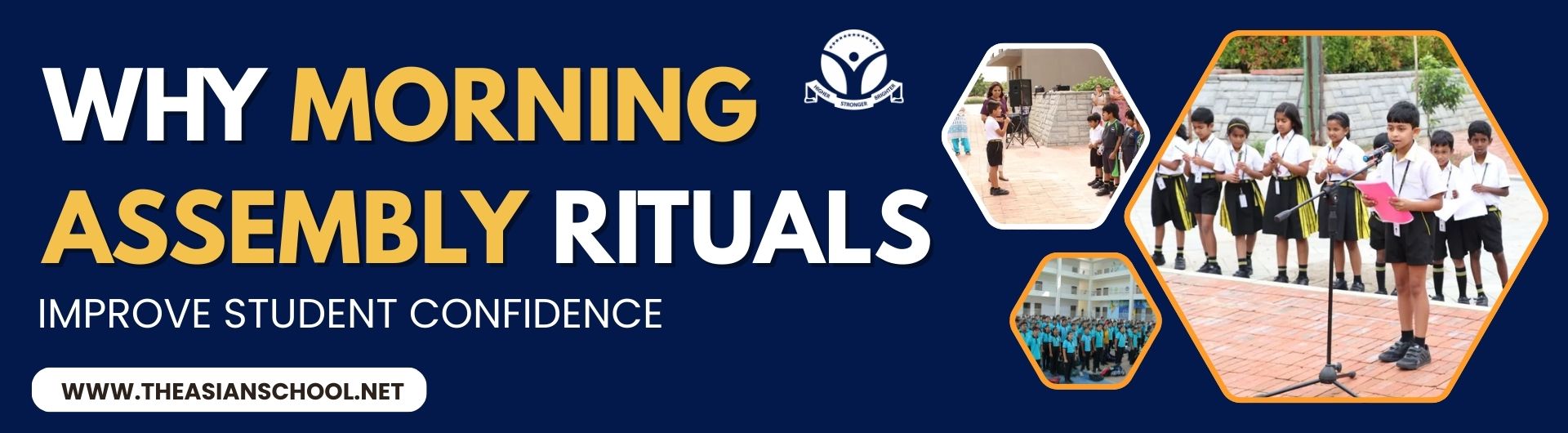


If you have ever been to a prestigious school, particularly a residential school in Dehradun or any of the top residential schools in India, you are aware that the Morning Assembly is a potent group ritual that marks the beginning of the day.
Standing in lines, singing a prayer, and listening to announcements may seem like a straightforward routine, but these brief moments are perhaps the most important of the school day. Character development is fueled by this ritual, which subtly transforms apprehensive students into self-assured public speakers and instills the unwavering discipline necessary for success in life.
Recognizing a school’s dedication to holistic education requires parents to think about enrolling their children in a coed residential school in India to comprehend the significant influence of the daily assembly.
1. Confidence – Conquering the Fear of the Stage
The ability of the morning assembly to eliminate stage fright and foster true confidence is its most obvious and immediate advantage. Standing in front of hundreds of classmates and teachers can be frightening for a child, but the assembly normalizes this difficult task on a daily basis.
A. The Daily Exposure – Students are assigned to lead the assembly on a regular basis. They are compelled to step outside of their comfort zone, whether they are anchoring the entire event, reading the news headlines, or giving the “Thought for the Day.”
- The Result – The outcome is that shyness gradually fades as a result of this consistent, encouraging exposure in a nurturing setting. The student gains proficiency in maintaining eye contact, projecting their voice, and clearly expressing their ideas.
B. A Stage for Talent – The assembly serves as the main venue for exhibiting non-academic skills. Students can express their creativity through group songs, short skits, poetry recitations, and cultural performances, and the entire school community will immediately recognize them favorably.
- The Result – The outcome is that a student who performs exceptionally well in storytelling, singing, or debate gets a chance to shine. This acknowledgment increases their sense of self-worth and fosters a sense of community, both of which are essential in a co-ed residential school in India.
C. Celebrating Success – Winners in athletics, academics, and extracurricular activities are honored during the assembly. It is a powerful experience to be called to the podium to accept an award in front of the entire school.
- The Result – The outcome is that everyone is inspired to pursue excellence by this public recognition, which makes the achiever and their House or cohort feel proud.



2. Discipline – The Foundation of Structure and Routine
Discipline is not only about punishment, but it is also about self-control, daily routine, and respect for common order. The morning assembly is like an interactive class in these essential life skills, especially in the organized atmosphere of a boarding school.
A. Punctuality and Readiness – The whole ceremony is very tightly scheduled. The students have to be at the place on time, wearing clean clothes, and in organized groups (usually according to their height or class).
- The Result – This daily activity is the foundation of punctuality and instantaneous readiness, which compels the students to manage their time in the morning very efficiently, a practice that lasts for the whole lifetime.
B. The Art of Listening – Students are to stand still and quietly during the prayer, the announcements, and the Principal’s address.
- The Result – This apparently easy action teaches the students active listening and focus. In a distraction-filled world, the assembly requires total attention, thus mentally preparing for the academic demands of the subsequent classes.
C. Following Instructions – Students must obey sequential instructions during the beginning and end of the ceremony and maintain decorum.
- The Result – This cooperative adherence to a structured procedure instills concern for authority, management, and the shared space. It encourages self-discipline, which is critical for handling personal obligations in a residential school in Dehradun.
3. Community and Values – Learning to Lead and Belong
Uniting Diverse Backgrounds: daily togetherness of all members in a diverse institution leads to the creation of a powerful unifying feeling and to the nurturing of the moral and ethical values that shield the whole institution.
A. Unity and School Spirit – All the different elements of the school joining together while singing the school song or the National Anthem creates a feeling of solidarity among them, the juniors and seniors, the day scholars, and the boarders.
- The Result – This experience of the whole school lifting its voices together is the cause of the transcendence of individual differences, the promotion of unity, pride of the institution, and a strong sense of community, which are the features of the best residential schools in India, or rather, the very foundation of school culture.
B. Values Teaching – Assemblies usually begin with a ‘Thought for the Day’ presented by the speaker, followed by a brief inspirational story, a pledge, or even a message from the Principal. Themes like kindness, gratitude, environmental awareness, and respect are discussed openly throughout the week.
- The Result – These lessons are taken in by the students on a daily basis, they help form the students’ character, moral compass, and the ability to feel and understand others’ feelings much more than if they were reading the values in a textbook.
C. Leadership Development – Senior students are usually tasked with managing, planning, and guiding the assembly. This contains setting themes, corresponding participation, and controlling the flow of the event.
- The Result – This duty develops organizational skills, teamwork, and responsibility, growing young leaders who can think on their feet and handle big groups confidently.
The Lifelong Impact of a Daily Ritual
More than just a daily routine, the morning assembly is the basic ritual that shapes the character, builds self-esteem, and fortifies the discipline of every student.
For parents in search of an all-encompassing education, the morning assembly at a co-ed residential school in India, such as The Asian School Dehradun, is not only indicative of the school’s commitment to producing well-rounded, self-assured, and world-ready individuals but also one of the most important factors that seasoned educators measure. This small daily practice creates a lifetime of positive habits.