
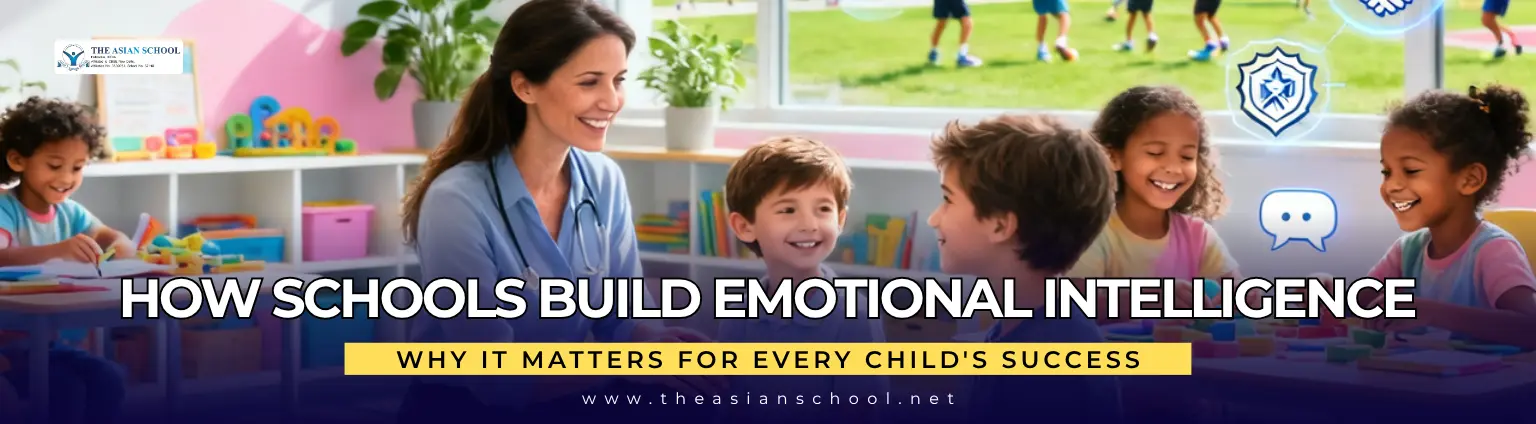


Schools build emotional intelligence (EI) through daily emotional check-ins, mindfulness practices, and social-emotional learning (SEL) into literature and arts. This helps children manage their exam anxiety and behavior, and build resilience for academic and personal success.
Building emotional intelligence in their school years is essential for your child’s overall well-being. As Dr. Gabor Mate explains, children who cannot fully experience and process their emotions face difficulty in healthy brain development, immune function, and physiological health. This shows us the importance of schools’ contribution in providing emotionally supportive environments that help your child develop emotional intelligence alongside their academics.
What is Emotional Intelligence (EI)
Emotional Intelligence (EI) refers to the ability to understand and manage your emotions. Children with high EI levels are better at communication, managing stress, and overcoming challenges. Schools have a huge impact on helping children build emotional intelligence during their teenage and adolescent years.
Here are the five main parts of emotional intelligence that schools work on:
- Self-Awareness
- Self-Regulation
- Motivation
- Empathy
- Social Skills

Why is Emotional Intelligence in Schools Important?
Emotional Intelligence in schools is important for the following reasons:
- Better Learning and Focus
Emotional Intelligence teaches children to calm down and manage their stress during tests and exams. It improves their focus and helps them perform better in class.
- Making and Keeping Friends
Emotionally healthy children can make good friends and keep them for a long time. They can do this by working in collaboration and avoiding fights, which are important for lasting friendships.
- Building a Resilient Attitude
Apart from exciting games and endless fun, your children also face bad days, peer pressure, and struggles with subjects in which they are weak. Emotional Intelligence helps them build a resilient attitude, so they do not give up and bounce back from failures.
- To Make Good Decisions
When your child understands how they feel, they think before making a decision or choosing. Emotional Intelligence helps them build the ability to make good decisions without being pressured by friends and peers.
- Good Mental Health
When children learn to talk about their feelings, they stop feeling lonely, stressed, or overwhelmed. In schools, such a supportive environment helps build good mental health, which is not only important in class but also in a career.
Also Read: Top 10 Fun GK Quiz Questions for School Students | Test Your Knowledge
How Schools Build Emotional Intelligence (EI)?
Schools help your children build Emotional Intelligence (EI) by including social and emotional learning (SEL) in their daily activities. They work on children’s ability to express emotions, manage stress, and understand others’ feelings by putting on their shoes.
- Social and Emotional Learning (SEL)
Schools often include the Social and Emotional Learning (SEL) system of emotional learning to teach students about being self-aware, how to manage their feelings, and empathy. They also learn about journaling, which helps them express their emotions.



- Teaching Self-Regulation
Mindfulness and breathing exercises are a major part of the school’s system of emotional learning. Teachers assist children in practicing breathing before studying and exams so they can perform better with a calm mind.
- Encouraging Empathy
Schools also include collaboration projects to encourage empathy among children. By doing this, they help children listen and understand other people’s feelings and viewpoints. Also, not only in school, but in later life, this emotional learning helps children to build meaningful relationships.
- Teaching How to Make Good Decisions
Teachers help students in making good decisions by encouraging them to think about things before reacting. They also teach them not to react only to emotions, but to use critical thinking as well.
- Resolving Conflicts
Schools focus on not pushing bad behavior forward that can lead to major problems in personal life and career as well. That is how children learn to resolve conflicts, handle arguments, and avoid them from an early age, making emotional intelligence in schools a crucial aspect.
- Personal Support from Teachers
Schools focus on making teachers children’s mentors. This is important to offer children a safe space to share their feelings, reach out for help, learn respectful behavior, empathy, and other important life lessons.
Conclusion
Emotional Intelligence in schools is important for children to ensure their mental well-being. When children learn to handle their emotions and stress from a very young age, they become better prepared for the world outside school. That is why schools integrate systems such as Social and Emotional Learning (SEL) to help children become aware of their emotions, understand their feelings, and build empathy.
The Asian School is a well-known co-ed, day-cum-boarding school in India. By integrating learning systems to support emotional intelligence, we help your children become emotionally healthy individuals. We provide them with specialized support through mentorship programs so they can feel safe, communicate, and perform better in their academics.
Also Read: 10 Famous Indian Scientists and Their Inventions That Changed the World
Frequently Asked Questions:
- Why is emotional intelligence important for children in school?
Emotional Intelligence in schools is important for children to help them manage stress, build positive relationships, and develop resilience.
- How do schools help students develop emotional intelligence?
Schools help students develop their emotional intelligence by including Social-Emotional Learning (SEL) into the curriculum.
- What are the benefits of Emotional Intelligence?
The benefits of Emotional Intelligence include:
- Academic Success
- Personal Growth
- Better Stress Management
- Good Communication
- Personal Well-Being
- Can emotional intelligence help children deal with exam stress?
Yes, emotional intelligence can help children deal with exam stress.
- How do teachers support emotional development in students?
Teachers support emotional development by creating a safe and inclusive environment in the classroom.