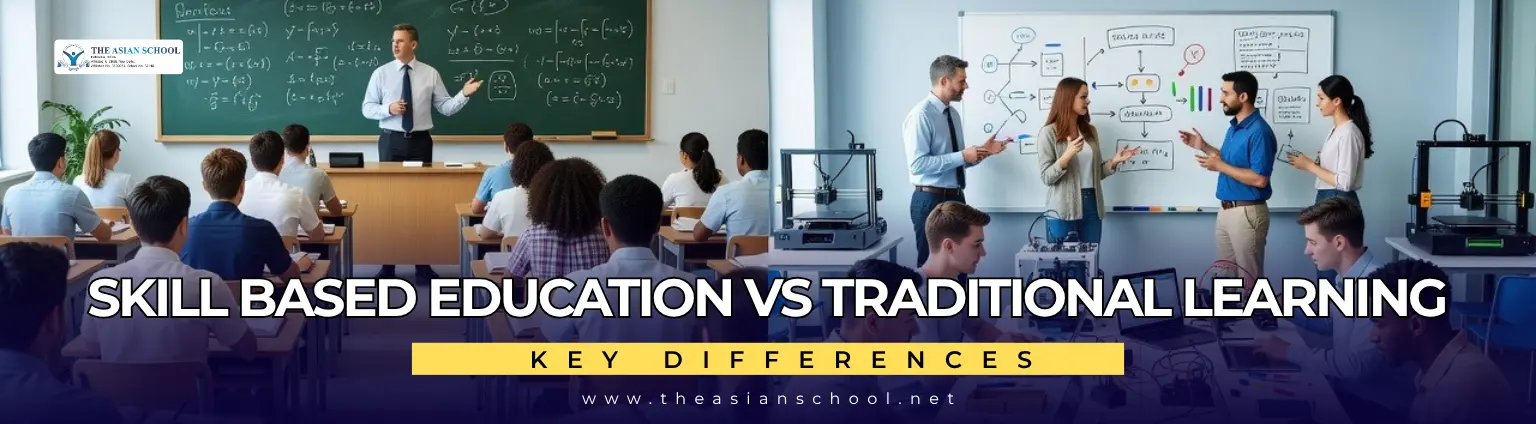


Differences between skill-based learning and traditional learning can be seen in the way children learn. Traditional learning mainly focuses on books, theories, and classroom learning. On the other hand, skill-based learning focuses on real-world problems, practical work, and useful skills.
Both traditional and skill based education have their own advantages for student growth. Traditional learning helps students build good knowledge through books, lessons, and regular classes. Skill-based learning provides more chances for students to practice what they learn through activities, projects, and real-life tasks. Understanding these learning methods can help parents, teachers, and students to choose the right way of learning for better learning, confidence, and future career growth. Let’s take a closer look at the key differences between traditional learning and skill-based learning.
- What is Traditional Learning?
- Benefits of Traditional Learning in Schools
- Limitations of Traditional Education
- What is Skill-Based Learning?
- Benefits of Skill-Based Learning
- Limitations of Skill-Based Learning
- Traditional Learning Vs Skill-Based Learning: Key Differences
- The Rise of the Hybrid Learning Approach
- Conclusion
- Frequently Asked Questions (FAQs)
What is Traditional Learning?
Traditional learning is a type of learning that is extremely popular in many Indian schools. This type of learning mainly focuses on classroom teaching, textbook facts, structured curriculum, and examinations. Therefore, under this approach, students learn by reading, listening, attending classes, and preparing for examinations. This type of learning is still encouraged in all schools to make sure that students study in an organized and consistent manner.
Benefits of Traditional Learning in Schools
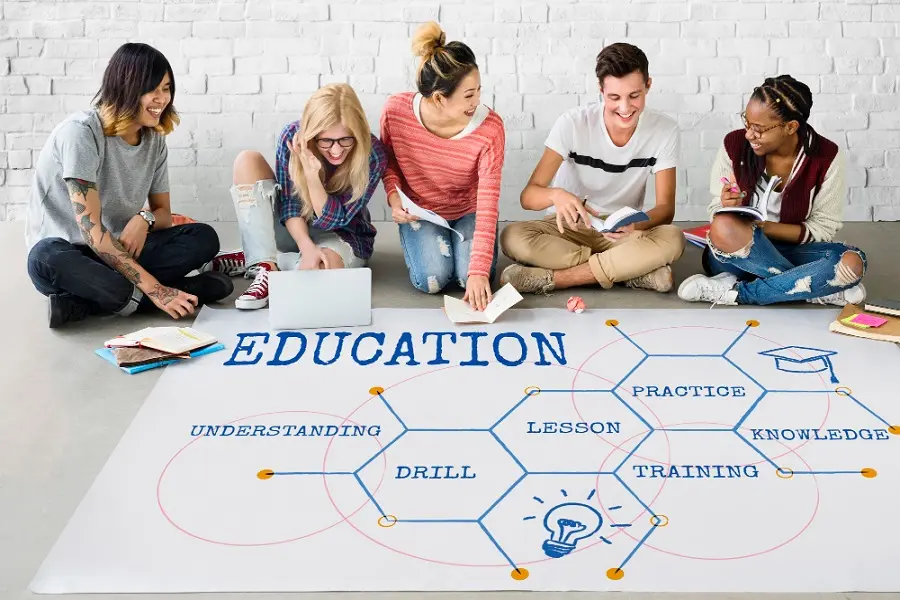
Traditional learning is a teacher-led, face-to-face learning approach that helps students understand concepts in a clear way. Let’s take a closer look at the key benefits of traditional learning in schools:
- Builds Basics: One of the biggest traditional education benefits is that it helps students learn vital concepts, facts, and rules through textbooks and classrooms. Students easily understand complex topics in a simple manner, which makes their basics strong.
- Improves Study Habits: Traditional learning is more inclined towards daily homework, regular academic classes, notes, and tests. This improves students study habits and makes them complete their work on time.
- Helps in Exam Preparation: Key components of traditional education include regular practice of concepts through class tests and examinations. Students are often prepared for exam patterns so that they become more confident while answering questions.
- Clear Guidance: There are no complex explanations written in books. Therefore, through traditional education methods, teachers easily explain topics to students in an easy language. This also makes it convenient for students to clear their doubts, ask questions, and follow lessons step by step.
- Covers Important Subjects: Schools follow a structured curriculum that covers subjects such as Maths, Science, English, and Social Studies. This gives students knowledge across different areas.
Limitations of Traditional Education
Apart from just traditional education benefits, there are several drawbacks of this learning as well. Let’s take a closer look at these drawbacks in detail:
- Less Practical Knowledge: Under the traditional learning approach, students usually spend more time doing reading, writing, and listening in class. They can have fewer opportunities for learning through experiments, activities, and hands-on tasks. This restricts their growth and critical thinking abilities.
- Increased Focus on Exams: Students are only focused on getting good scores, rather than understanding concepts properly. This may even cause them to memorize answers rather than know and apply what they have learned.
- Less Room for Creativity: Following fixed lessons and answers may give students fewer opportunities to share new ideas, try different methods, or find their own solutions.
- No Real-Life Practice: Students may learn many useful concepts, but they may not always have the opportunity to use them in real-life situations, like solving everyday problems or working on projects.
- Same Technique For All: In a traditional classroom, the approach is often the same for all students. However, teachers must understand that students have different levels of learning abilities, so some may need more activities or personal guidance.
What is Skill-Based Learning?
Skill-based learning is a type of educational approach that teaches students through practical actions, real-world tasks, and hands-on practice. It is not only focused on memorizing facts or textbook knowledge. It helps students develop key abilities like problem-solving skills, teamwork, and communication. In 2026, many educational institutions are embracing skill based education to help students understand concepts better.
Benefits of Skill-Based Learning
Skill based learning is a more practical approach to education. Let’s take a closer look at some of the key benefits of skill-based learning for students:
- Improves Practical Skills: Skill based education provides an in-depth practical understanding of a concept. Therefore, students get opportunities to use what they learn through projects, activities, experiments, and hands-on tasks. This helps them to understand subjects in a better way.
- Builds Problem Solving Skills: Under this approach of learning, students are taught to view a problem, consider different solutions, and select the best one. This skill serves them well in school and in their future lives, making it one of the significant benefits of skill-based education.
- Builds Confidence: Students feel more confident when they complete tasks and solve problems by themselves. They also become comfortable with experimentation and with learning from their mistakes. Also, it makes learning creative rather than boring or repetitive.
- Develops Communication and Teamwork: Group activities and projects teach students how to express ideas, listen to others, and work cooperatively. These skills are useful for their future study and careers.
- Prepares Students for Future Careers: Skills based learning allows students to acquire practical skills that can be used in real jobs. It also helps them to know their interests and make appropriate career choices.
Limitations of Skill-Based Learning
Although skill based education has many benefits, it also has some limitations. Let’s take a closer look at these drawbacks in detail:
- More Resources: More money and resources might be needed for practical activities, projects, tools, and equipment in educational institutions. Some schools might not have the full set of resources to run regular skill-based activities. Thus, the focus shifts directly to traditional education.
- Need Skilled Teachers: Teachers should be properly trained for planning practical activities and guiding the students. If students are not well guided, they might not get the full benefit of skill-based learning.
- May Require More Time: Activities, projects, and hands-on tasks generally take longer to complete than reading a lesson or writing an assignment. This makes it difficult to cover all topics quickly.
- Difficult to Assess: Practical skills are not always as easy to assess as written answers. Teachers may need different ways of understanding how each student is doing.
Traditional Learning Vs Skill-Based Learning: Key Differences
Both traditional education and skill based education help students understand concepts in different ways. The key difference between them is learning style, practice, and application in the real world.
Let’s take a closer look at several other vital differences between both learning approaches:
| Basis | Skill-Based Learning | Traditional Learning |
| Main Focus | Practical skills and real-life tasks | Academic knowledge and theories |
| Learning Method | Learning by doing | Knowledge Building Through Teaching and Reading |
| Classroom Role | Students actively participate | Teacher mainly leads the class |
| Assessment | Projects, tasks, and practical work | Tests, exams, and written assignments |
| Problem Solving | Students solve real-world problems | Students mainly solve textbook problems |
| Creativity | Encourages students to create and experiment | Usually follows a fixed syllabus |
| Career Preparation | Builds job-related skills | Builds academic subject knowledge |
| Learning Tools | Projects, workshops, activities, and simulations | Textbooks, notes, lectures, and worksheets |
| Student Participation | High involvement in activities | More listening and note-taking |
| Result | Develops practical abilities and confidence | Builds subject knowledge and exam readiness |



The Rise of the Hybrid Learning Approach
Many educational institutions in India are now leveraging both traditional education and skill based education. This helps students to get a complete learning experience without getting bored.
Here is why this hybrid approach is making an impact:
- Merges Knowledge and Practice: Students learn a topic first from books and classroom teaching. Then they apply that knowledge in projects, activities, or real-world tasks to understand it better. This combined approach helps students get the advantages of both learning methods.
- Makes Learning More Interesting: Under the hybrid approach, students not just listen to teachers or read textbooks. They also do activities, experiments, and group work so it’s more fun to learn.
- Develops Academic and Practical Skills: Hybrid learning helps students to improve their knowledge of subjects and, at the same time, develop communication skills, teamwork, creativity, and problem-solving skills that can be used in everyday life.
- Supports Different Learning Styles: Every student has their own way of learning. Some understand better through reading, others through practice. Hybrid learning gives students both options to understand the lessons more easily.
Conclusion
Both traditional learning and skill based education are important for student education. Traditional learning builds good subject knowledge, and on the other hand, skill based learning helps students to apply that knowledge to real-life scenarios. A balanced approach can help students excel in exams, develop useful skills, become confident, and better prepare for their future studies, careers, and everyday life.
The Asian School, Dehradun is one of the best boarding schools in India that follows a hybrid learning approach. Students are taught important concepts through teachers, books, and structured lessons, while also taking part in projects, activities, teamwork, and practical tasks. This helps students gain strong academic knowledge along with creativity, confidence, communication, and problem-solving skills.
Also Read: List of Best Boarding Schools In Dehradun
Frequently Asked Questions (FAQs)
1. Which is better, traditional or skill-based learning?
Both traditional education and skill-based learning have their own benefits. Combining both methods can give students good academic knowledge and useful practical skills.
2. How does skill-based learning benefit students?
Skill based education helps students develop practical skills, creativity, communication, teamwork, confidence, and problem-solving abilities.
3. Does skill-based learning help with exams?
Yes. When students understand concepts through practical activities, they can remember and apply them better during examinations.
4. What is hybrid learning?
Hybrid learning combines traditional classroom teaching with practical activities, projects, experiments, and other skill-based learning methods.
5. Why is hybrid learning useful for students?
Hybrid learning gives students both academic knowledge and practical experience. This helps them become more confident and better prepared for future careers.
6. How can schools balance both learning methods?
Schools can teach concepts through regular classes and textbooks and then provide projects, activities, experiments, and real-life tasks for practical learning.